
Living in North Jutland has taught me to love the raw power of the Nordic elements. Today, I want to share two natural wonders that feel like stepping onto another planet.
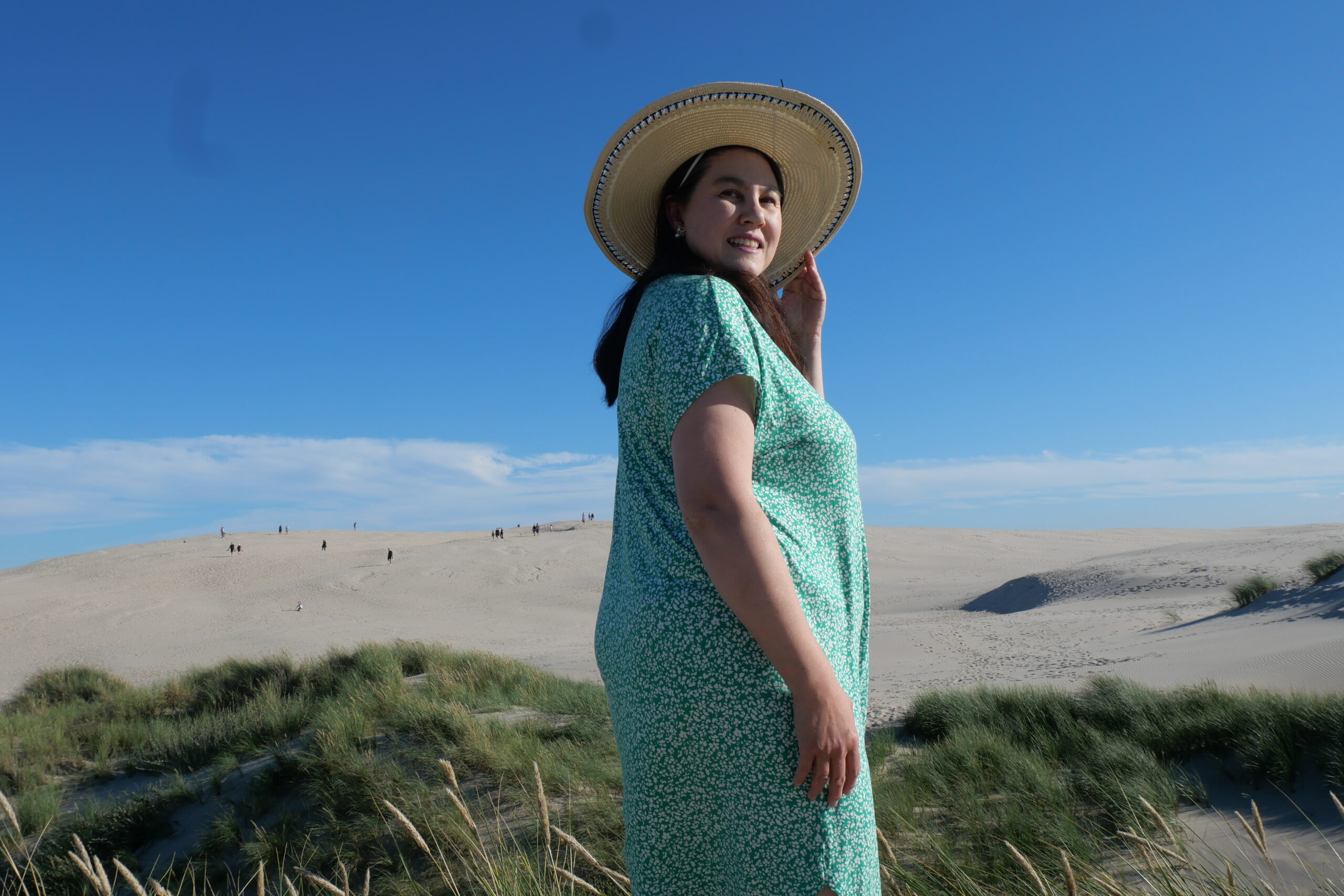
First is Råbjerg Mile, Denmark’s very own moving sand desert. This massive sand dune shifts up to 18 meters every single year, swallowing everything in its path.
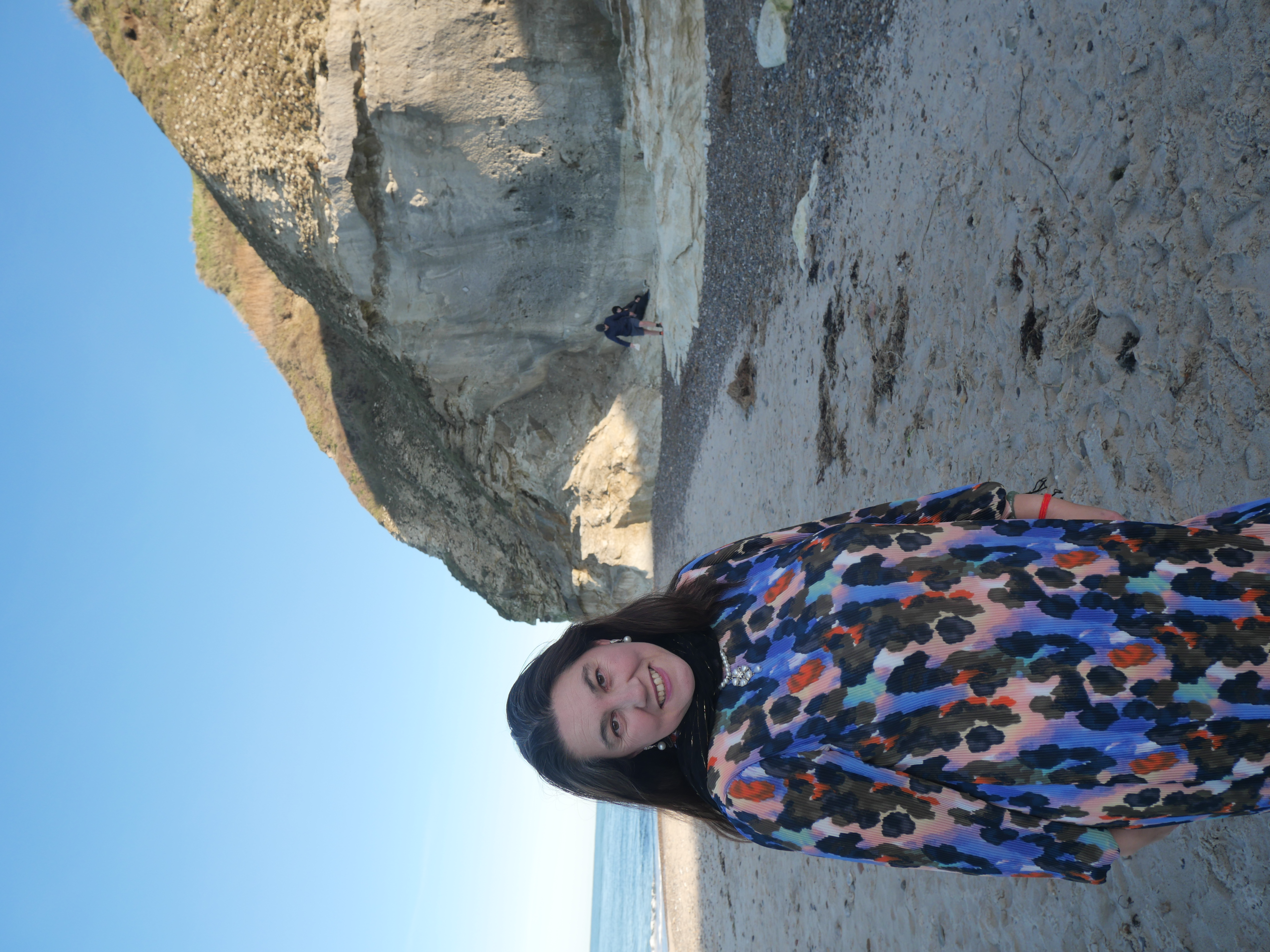
Second is Bulbjerg, Denmark’s only bird cliff. Standing on top of this giant limestone rock against the crashing waves of the North Sea makes you feel incredibly small but completely alive.
💡 Quick Travel Tips & Funfacts
- Råbjerg Mile (The Shifting Desert): This is Northern Europe’s largest migrating sand dune. It contains a massive 3.5 million cubic meters of sand, standing up to 40 meters high, and it physically moves about 15 meters northeast every single year toward the top of Denmark! Scientists predict it will completely swallow the main highway to Skagen in about a century.
- Råbjerg Mile Visitor Tip: It is completely free to enter and open 24/7. Always pack a pair of sunglasses—not just for the sun, but to protect your eyes because the strong coastal wind can whip the sand around quite aggressively!
- Bulbjerg (The Shoulder of Jutland): Standing at an impressive 47 meters tall, Bulbjerg is the only rock formation in Jutland and the only bird cliff on the entire Danish mainland! It serves as a bustling sanctuary for up to 500 breeding pairs of black-legged kittiwakes (a unique North Atlantic gull) that build their nests directly onto the steep limestone ledges.
- Bulbjerg’s Fallen Legend: Just off the coast of Bulbjerg used to stand a massive, 16-meter-high limestone pillar in the sea called Skarreklit. Local myths said that when the giant stone pillar finally fell, the world would end—thankfully, it collapsed during a massive autumn storm in 1978, and the world is still here! Today, you can only see its stone foundation hidden under the waves.
- Bulbjerg Visitor Tip: There is an old World War II observation bunker right on top of the cliff that has been converted into a small, completely free museum covering the area’s geology, birdlife, and wartime history.
Have you ever experienced the wild nature of the Danish west coast? 🦅
Leave a Reply