Blog
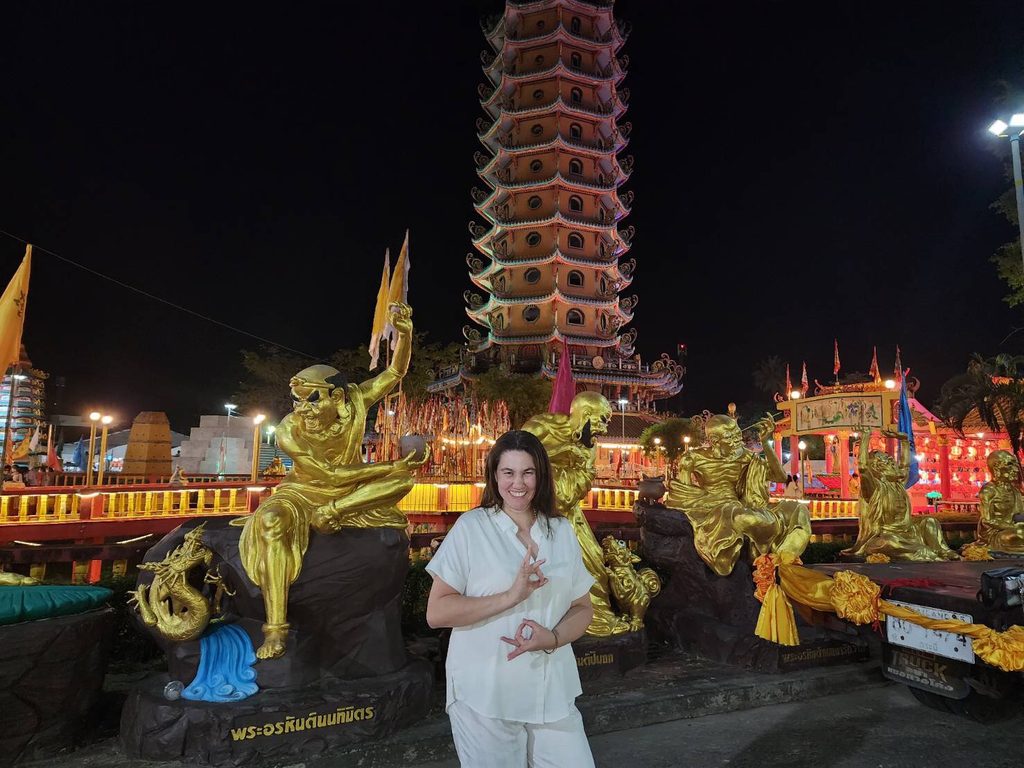
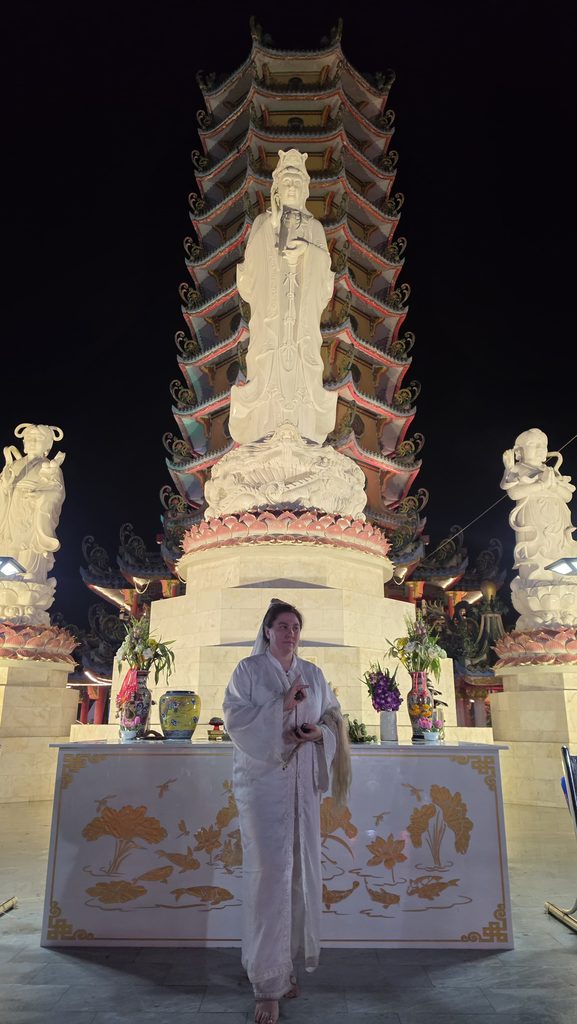
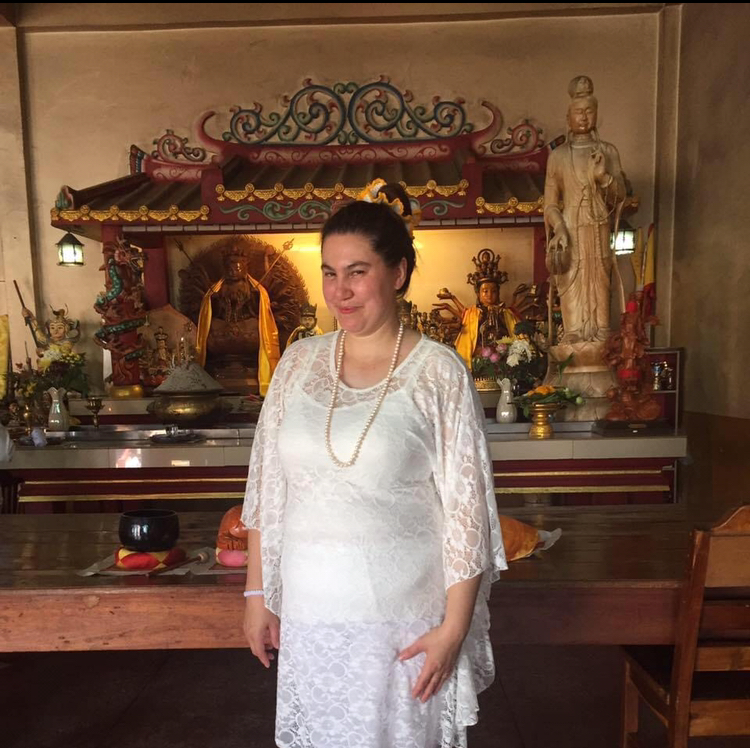
Having traveled across fifty countries and grown up between Thailand and Denmark, I carry a deep, lifelong connection to the spiritual traditions of my homeland. Yet nothing in the world compares to the sacred power, devotion, and ancient mysteries of The Nine Emperor Gods Festival (The Vegetarian Festival)—especially when experienced from the inside at Cheng Chui Chor Soo Kong Shrine (ศาลเจ้า เฉ้งจุ้ยจ้อชู้ก๋ง) in Nuea Khlong, Krabi.
For nine sacred days and nights during the ninth lunar month, devotees dress in pure white, observe strict vegetarian discipline, and purify body and soul. Here in Nuea Khlong, the festival is not merely something you watch from the sidelines—it is a living, breathing spiritual journey connecting heaven, earth, and the sea.
Welcoming the Gods at Nopparat Thara Beach & Entering Trance
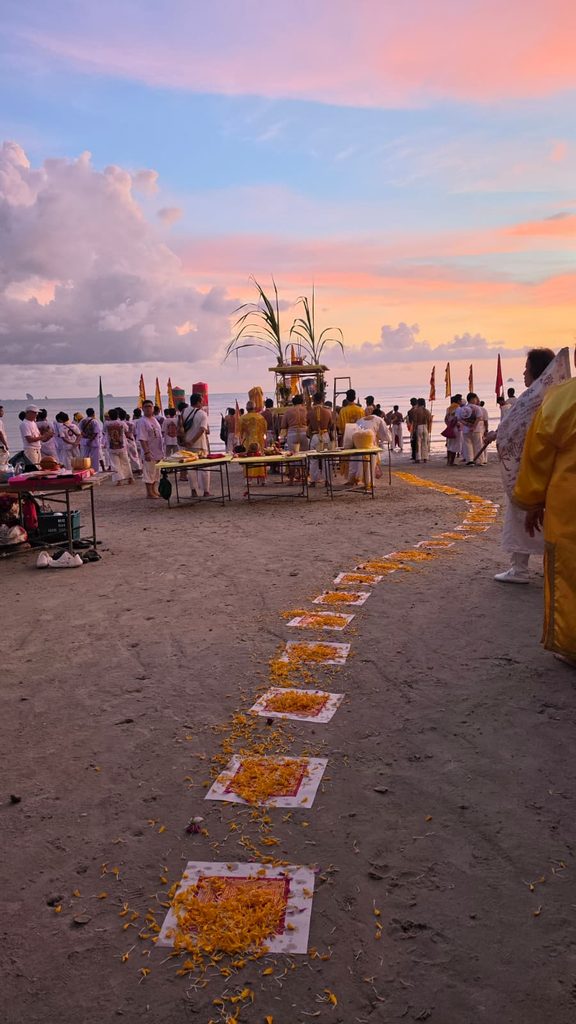
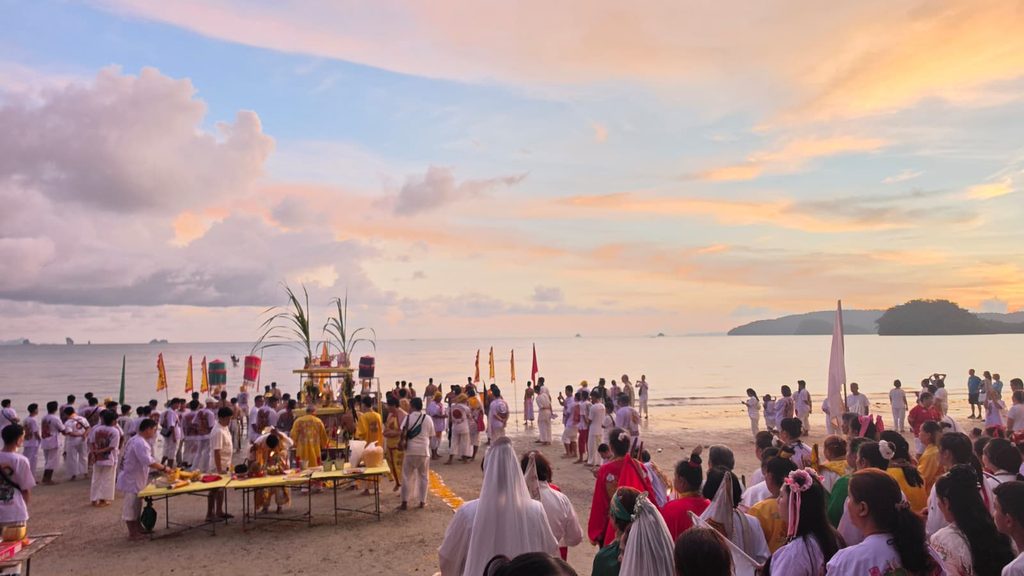
The spiritual heart of the festival begins with the grand ceremony to welcome the presiding deity, Kiu Ong Tai Tae (กิ๋วอ๋องไต่เต่), down from heaven at Nopparat Thara Beach (หาดนพรัตน์ธารา). According to sacred tradition, the deity never touches the earthly ground, so he must descend where water meets the shore. After offerings are made to the four elements—earth, water, wind, and fire—shrine officials wade into the sea to invite his divine spirit into a sacred urn filled with fragrant sandalwood.
Standing on the beach amidst crashing waves, ceremonial drums, gongs, cymbals, and clouds of incense, I stepped into a deep state of spiritual trance as a chosen Ma Song (“the horse of the gods”)—surrendering control and becoming a vessel for ancient divine forces as we welcomed the gods ashore. Along the procession back to the shrine, families set up altars and lit firecrackers in joyful reverence. Once we arrived at the temple, the shrine manager offered a formal report in Chinese, the gods were enthroned, and the lanterns atop the tall Go Teng pole were lit to shine throughout the entire festival.
Feeding the Five Celestial Armies & Blessing the Streets
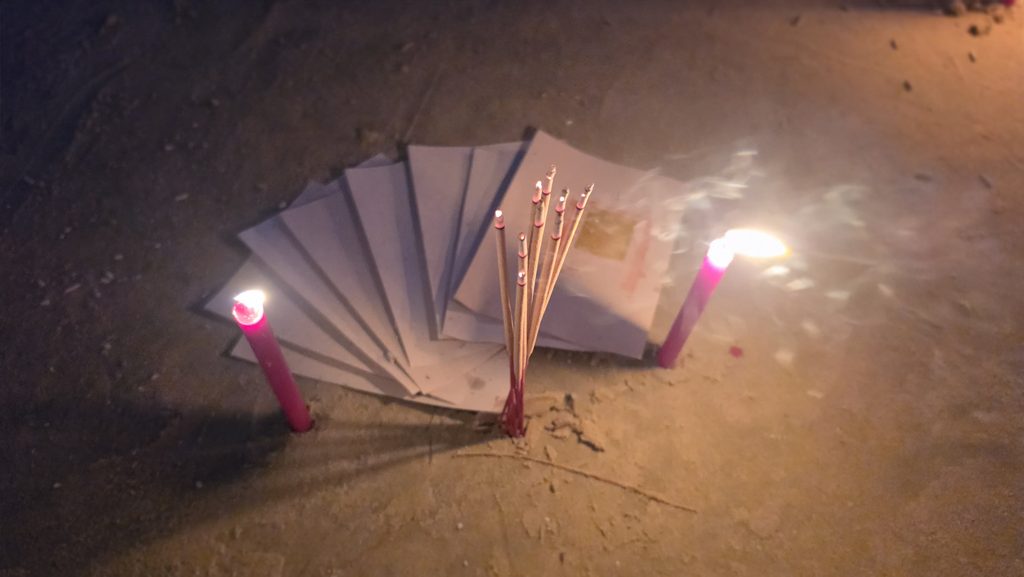
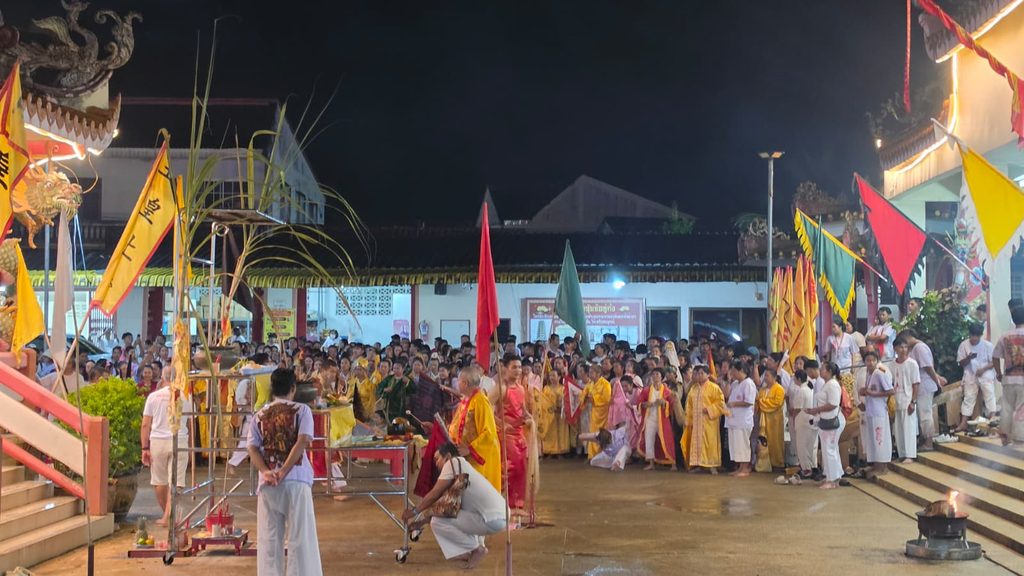
On the third, sixth, and ninth days of the festival, the shrine holds the Ceremony of Feeding the Celestial Soldiers (Ko Kun / พิธีโกกุ้น). Because high-ranking deities descend to inhabit the spirit mediums, five vast celestial armies—guarded by banners of black (999,999 soldiers), green (888,888), red (777,777), white (666,666), and yellow (555,555)—stand watch over the temple grounds. Offerings of vegetarian dishes, seasonal fruits, and even grass, mung beans, rice, and salt for the generals’ celestial horses are prepared before the armies are sent out to protect the community.
On the fourth and fifth days, the deities travel out in grand street processions to bless the residents of Nuea Khlong and Talad Kao (Old Market) in Krabi Town. Families prepare red-draped altars in front of their homes with incense, candles, tea, salted rice (Kiam Bi), fruit, and burning sandalwood, welcoming the gods to cleanse their homes and bring peace and good fortune.
Walking Through Fire & Climbing the Blade Ladder
Around the sixth day comes one of the most awe-inspiring tests of faith: the Fire-Walking Ceremony (พิธีลุยไฟ). Prepared a full night in advance and blessed through sacred rituals, the glowing bed of hot coals is first purified by the deities before they lead the way across the flames—followed by devoted vegetarian followers. Guided by a pure heart and non-violence, walking barefoot across the fire cleanses away negativity, illness, and dark energy, leaving the spirit purified.
On the seventh night, devotees gather for the Ceremony of Worshiping the Nine Planetary Deities (พิธีไหว้ดาวนพเคราะห์), offering flowers, incense, candles, and coins aligned with their birth-day guardian star for lifelong protection and blessings. At Cheng Chui Chor Soo Kong Shrine, this sacred night also includes chanting blessings, sending spiritual signals to heaven and earth, and the breathtaking climbing of the razor-sharp blade ladder.
Crossing the Bridge of Destiny (Koi Han) & Farewell at Chao Fa Pier
On the eighth day, believers travel from across Krabi and neighboring provinces to cross the Bridge of Destiny (พิธีโกยฮั่น) to ward off misfortune. Holding a gender-marked paper effigy with three sticks of incense—inscribed with our name and birth date, and holding tiny clippings of our hair, fingernails, toenails, and clothing—we walk across the bridge to transfer our burdens onto the paper figure. At exactly 11:59 PM, all effigies are burned in a sacred fire, and the ashes are sealed inside a red-draped clay pot.
On the final night, ornate palanquins escort the Nine Emperor Gods in a grand, firework-lit procession from Nuea Khlong to Chao Fa Pier in Krabi Town. There, waiting boats carry the sacred incense urn and the clay pot of ashes out into the deep sea—symbolizing that the gods carry away all sorrow, illness, and misfortune, leaving behind peace and blessings. Afterward, devotees offer final prayers, change out of their white garments, and share their first non-vegetarian meal, before a tenth-day feast honors ancestral spirits and the three sacred flags from the lowered Go Teng pole are auctioned to bring prosperity to local families.
Read My Full Spiritual Story in My Book (Out Now in Danish!)
Walking on red-hot coals, climbing ladders of razor-sharp swords, and experiencing the sacred world behind closed temple doors changed my life forever. I have shared the full, deeply personal account of these experiences in the fourth volume of my life story:
📖 The True Meaning of the Nine Emperor Gods Festival
The True Meaning of the Nine Emperor Gods Festival – The rituals, the spiritual timeline, and the miracles of everyday life (The Traveling with Anni Story — Volume 4)
The Danish edition is available now as both a printed book and e-book via Bookmundo (and an English edition is coming soon!). You can find direct links to my books and explore more stories from fifty countries right here on Traveling with Anni.This section provides an overview of the blog, showcasing a variety of articles, insights, and resources to inform and inspire readers.
-
A Scenic Road Trip From Nørresundby to Thy: Langelund Church, Thorup Beach & Giant Wind Turbines at Østerild
Blog You don’t always need to board an international flight to experience unforgettable landscapes, fascinating…
-
Welcoming the Gods From the Sea: Sacred Rituals, Fire-Walking, and Spirit Trance at Cheng Chui Chor Soo Kong Shrine in Krabi
Blog Having traveled across fifty countries and grown up between Thailand and Denmark, I carry…
-
Inside Kolkata’s UNESCO Durga Puja: Millions of Visitors, Nighttime Crowds, and the Sacred Story of Goddess Durga
Blog This section provides an overview of theHaving traveled across fifty countries, I have witnessed…

Leave a Reply